


Arn-Identified Flying Objects and Alien Friends - “The Hag”, that History Couldn't Silence!


Last time, Arn-Identified Flying Objects and Alien Friends invited us to look backward with tenderness. "Bells of Silver" carried memory like a family heirloom, polishing old stories until they caught the light again, proving that the past could comfort as much as it could haunt. But with "The Hag," Arne Floryd reaches into history with a very different intention. This time, he isn't opening a drawer of cherished keepsakes. He's unearthing a grave that was never meant to stay forgotten. This one demands that we remember the people history tried to erase. And as the first shadowy chords begin to pulse, it becomes clear that this isn't simply another folk tale retold. It's a centuries-old wound reopening through the language of alternative rock, daring the past to speak in the present once more.

Taken from the album The King and the Sparrow, "The Hag" also marks an intriguing shift in Arn-Identified Flying Objects and Alien Friends' musical landscape. While much of the record draws deeply from Swedish folk traditions and pastoral imagery, this particular track arrives wrapped in a darker, more kinetic energy. Folk remains its spiritual foundation, but it collides with brooding new wave, indie rock, Britpop swagger, and post-punk atmosphere, creating a sound that feels as though ancient folklore has wandered into a modern city after midnight. From the opening moments, the mood is impossible to ignore. A thick, pulsing groove immediately evokes the hypnotic cool of bands like Depeche Mode, yet the song quickly establishes an identity all its own. The rhythm marches with unwavering determination while shadowy guitars and moody textures create an atmosphere suspended somewhere between ritual and rebellion. There is a cinematic quality to the production, but it never feels overly polished. Instead, the darkness seems to seep naturally from every instrument. The recurring refrain, "Blue is the night, red is the light," functions almost like an incantation. Rather than merely introducing imagery, it paints an emotional landscape where beauty and violence coexist. Blue suggests mystery, silence, and mourning, while red immediately recalls fire, blood, and persecution. Those simple colors become recurring symbols throughout the song, anchoring listeners in a world where innocence and brutality are inseparable.
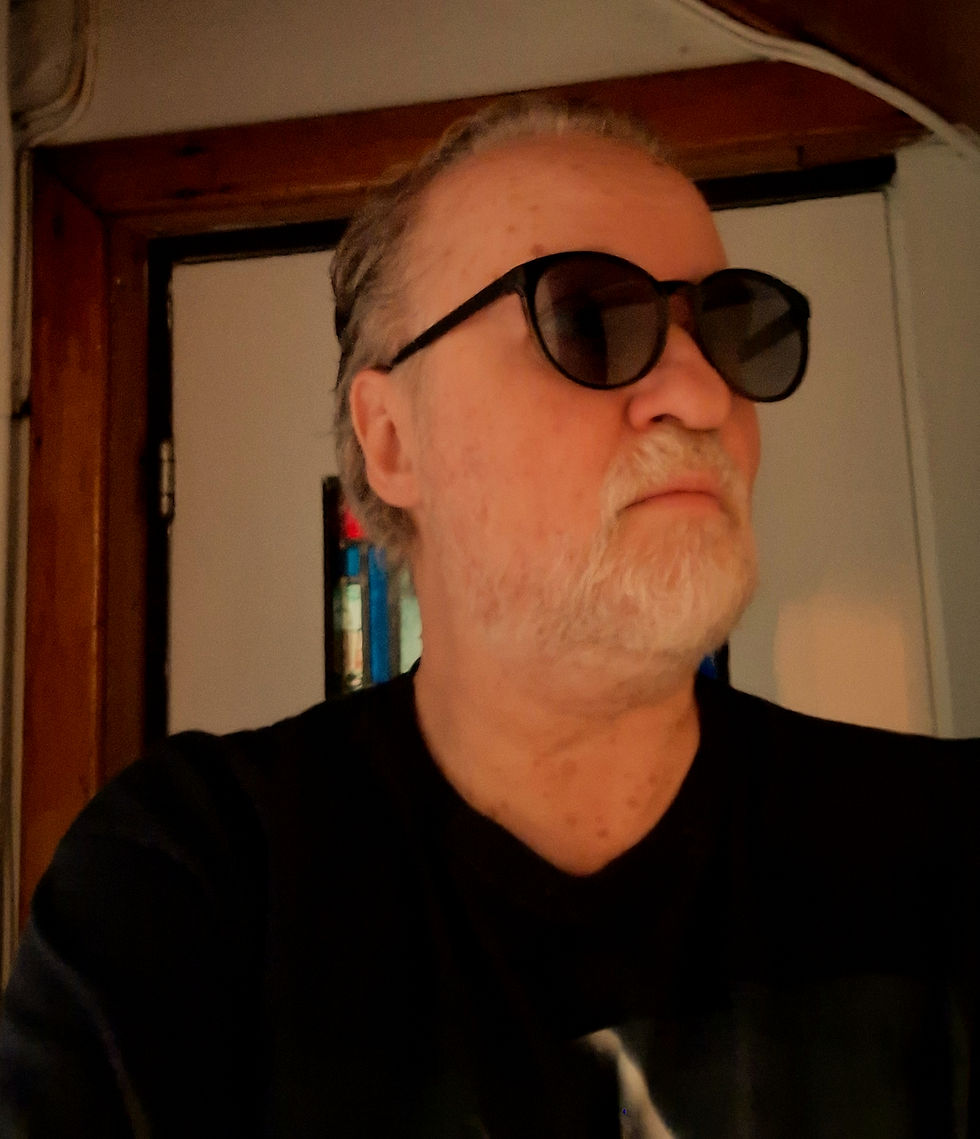
At the heart of "The Hag" lies an extraordinary act of reinterpretation. Arn Floryd draws inspiration from a text written in 1834 by Swedish writer and composer Carl Jonas Love Almqvist, choosing not to translate it literally but to reimagine its emotional essence. That decision proves crucial. Instead of presenting the work as a historical artifact, he allows it to breathe with contemporary urgency. The story remains tragically intact: a woman accused of witchcraft is burned at the stake. Yet the emotional focus shifts beyond historical detail toward the universal consequences of fear, prejudice, and collective cruelty. The repeated image of "the black bones of the mother" is among the song's most devastating lyrical moments. It lingers long after it is sung, suggesting that landscapes themselves carry memories of injustice. Mountains become silent witnesses. Ashes become history's archive. Every repetition deepens the weight of that image rather than diminishing its power. Then the composition undergoes one of its most fascinating transformations. The central section, inherited from Almqvist's nineteenth-century writing, introduces a more intimate melodic structure that briefly softens the surrounding darkness without reducing its emotional impact. Here, the tragic humanity of the narrative comes into sharper focus. The heartbreaking image of a mother secretly providing milk for her children before her execution transforms what could have remained symbolic into something painfully personal. Suddenly, this is no longer merely a story about witch trials. It is about motherhood, survival, desperation, and the ordinary lives destroyed by extraordinary cruelty. Musically, this shift is handled with remarkable sensitivity. The arrangement opens slightly, allowing the melody to carry the emotional burden before gradually rebuilding toward the song's inevitable return to its darker groove. The contrast creates one of the track's strongest dramatic arcs, demonstrating a keen understanding of storytelling through musical dynamics. Vocally, Arn Floryd delivers one of his most compelling performances. His voice carries a weathered, expressive quality that perfectly complements the material. Rather than dramatizing the tragedy, he approaches it with measured restraint. That restraint ultimately proves more powerful than theatrical excess ever could. His performance feels less like someone narrating history and more like someone haunted by it. The rhythmic foundation also deserves enormous praise. Andreas Quincy Dahlbäck's drumming injects enormous momentum into the composition. Driving the song forward with explosive force while preserving its hypnotic pulse. His performance consistently strikes a balance between precision and raw physicality, lending the music a heartbeat that never allows listeners to become comfortable. Daniel Lagerlöf's guitar work provides another essential emotional voice. His soaring lead passages arrive not as flashy interruptions but as emotional releases. The solos seem to rise above the darkness like sparks escaping an enormous fire, carrying grief, anger, and resilience simultaneously. Together, the drums and guitars create an exhilarating contrast that keeps the listener firmly rooted in the earth while the other continually reaches toward the sky. Arn-Identified Flying Objects and Alien Friends have always excelled at blending poetic lyricism with adventurous musicianship, but "The Hag" feels like a particularly bold artistic statement. It seamlessly unites Swedish folk heritage, post-punk moodiness, indie rock immediacy, and cinematic storytelling into a work that feels simultaneously ancient and modern.

By the time the final refrain fades beneath Daniel Lagerlöf's lingering guitar lines, the song leaves behind more than a memorable melody. It leaves a lingering silence filled with questions, grief, and reflection. It does not seek to comfort its audience. Instead, it asks them to remember. Step into the shadows, turn the volume up, and let "The Hag" cast its spell. Then support Arn-Identified Flying Objects and Alien Friends by streaming, sharing, and following their journey, because music that keeps history alive deserves to be heard long after the echoes fade. Listen below!
#IndieRock #AltRock #FolkRock #AltFolk #Music #Sweden #Stockholm
Listen to "The Hag" on #Spotify -
You can check out and follow Arn-Identified Flying Objects and Alien Friends' musical journey on their Instagram profile here -


Comments